
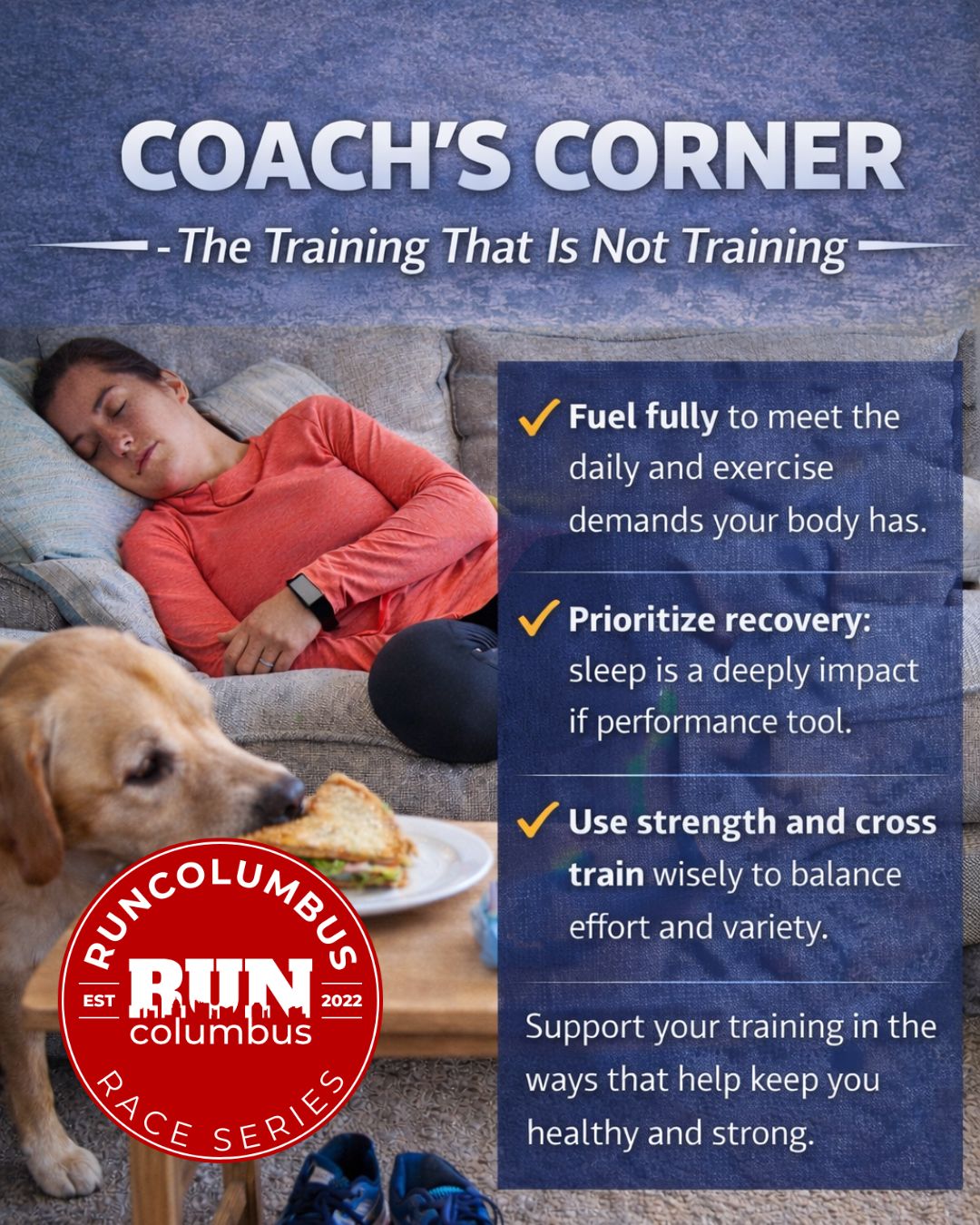
We spend a lot of time talking about miles, paces, splits, and workouts. But some of the most powerful influences on your performance are the things that do not show up on your watch. Foundational to all training is preparation and recovery. You need enough energy to support daily life and the added demands of exercise. Operating in an energy deficit forces the body to pull from itself, often breaking down lean tissue, meaning our muscles, to keep up. That creates a fine line between exercising for weight loss and fueling enough to stay healthy and strong. Beyond calories, quality matters. Whole fruits, vegetables, and whole grains provide the vitamins, minerals, and phytochemicals that allow your body to adapt, repair, and perform. You are not just feeding miles. You are feeding adaptation.
Recovery is often the most overlooked piece of a training plan. As volume builds, what you do outside of running starts to matter more. Sleep hygiene becomes a performance tool. The post-workout nap definitely counts. Consistent bedtime routines, limiting late-night screen exposure, and prioritizing restorative sleep support tissue repair, hormone balance, and mental sharpness. Wearable devices can offer insight, but they are not perfect. Use them as trends, not truth. The greater skill is listening to your body. If you are exhausted, flat, or struggling to hit effort targets, that is feedback. We do not perform our best when depleted. Sometimes the smartest workout is the one you skip so your body can absorb the training you have already done.
Strength and cross-training are powerful complements when used strategically. Mobility work, core strength, and resistance training improve durability, posture, and efficiency. They can be game changers in maintaining form late in races. Cross-training can build aerobic fitness while reducing repetitive joint stress and adding variety that prevents burnout. But effort is still effort. Replacing a rest day with another high-intensity session is not recovery. Respect the balance. The invisible work of fueling, sleeping, recovering, and supporting your body is what makes the visible work possible. Train hard, yes. But take care of yourself in ways that let you keep training tomorrow.
Dr. Chris Taylor, PhD, RDN, LD, FAND, RRCA Level I Coach is a running coach, registered dietitian, and nutrition researcher at The Ohio State University. He serves as the lead coach for the Columbus Westside Running Club, where he supports runners of all abilities through evidence-based training and practical nutrition guidance. An active participant in the RUNColumbus Race Series, Chris brings a unique blend of academic expertise, coaching insight, and community engagement to every mile.