
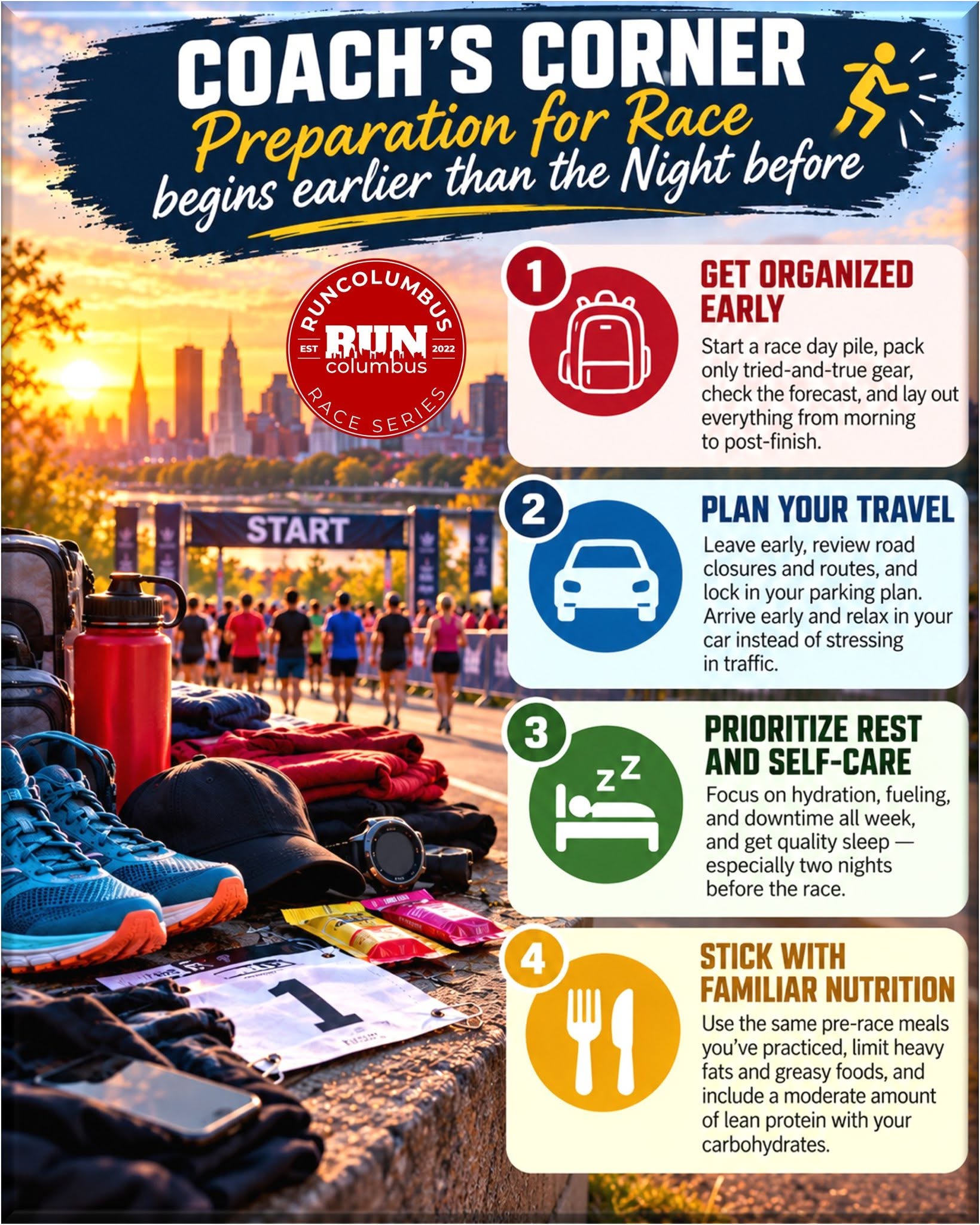
Race day preparation doesn’t begin the night before the race. It starts at the beginning of race week! There are plenty of things to organize, and the earlier you begin, the less likely you are to forget something important. Start a dedicated pile of race day essentials early in the week. Every time you remember something you’ll need, go find it and add it to the pile rather than trusting yourself to remember later. Get your laundry done early and set aside the apparel, socks, and gear you’ve already tested during training. Nothing new on race day! Keep an eye on the weather forecast, but prepare for conditions slightly warmer and cooler than predicted because forecasts have a habit of changing. Think through your entire race day, from the moment you wake up, to the drive, the starting line, the race itself, and everything you’ll need after finishing. Go from head to toe and beginning to end. Don’t forget your nutrition! Make sure you have your familiar breakfast foods and preferred race fuels, including the exact flavors you’ve practiced with. Don’t count on the race expo to have what you need.
If you’re driving to the race, leave EARLY! Traffic around major races is almost always worse than you expect, especially with thousands of participants trying to reach the same destination. It is far better to arrive ridiculously early and spend some time relaxing in your car, gathering your belongings, and getting mentally prepared than to sit in traffic watching the clock tick closer to the start. Do your homework early in the week. Review road closures, detours, and the best routes into your planned parking area. Some events offer prepaid parking, while others require you to navigate garages, surface lots, or street parking. Check meter restrictions and whether weekend or holiday parking rules might offer additional options. Have a backup plan in case your preferred parking location is unavailable. Luck favors the prepared! Every logistical challenge you eliminate ahead of time is one less distraction competing for your attention on race morning. You’ve worked too hard during training to let preventable stress steal your focus before you even reach the starting line.
Above all, race week should be about taking care of yourself. Your training is complete, and now your priorities are consistent fueling, hydration, recovery, and quality sleep. Pay particular attention to getting a good night’s sleep two nights before the race. Pre-race excitement, nerves, and an unusually early alarm can make sleeping the night before difficult, so building a foundation of good sleep throughout the week is important. When it comes to nutrition, stick with what worked before your longest training runs or walks. The night before the race is not the time to experiment with unfamiliar foods or a massive pasta dinner. Emphasize familiar carbohydrate-rich foods while keeping heavy fats, oily sauces, and large portions of protein in check. You don’t need to eliminate protein entirely. A moderate portion of lean meat with your pasta can be perfectly appropriate if that’s what you’ve practiced. If you’re traveling, do whatever you reasonably can to recreate your normal routine. That might mean choosing a hotel with a kitchenette or even packing your own toaster and a baggie of English muffins! The goal is to make race morning feel as familiar and predictable as possible. The fewer decisions and distractions you face on race day, the more energy and attention you can devote to executing the race you’ve spent months preparing for. Your training got you ready. Your preparation helps you put that training to work!
Dr. Chris Taylor, PhD, RDN, LD, FAND, RRCA Level I Coach is a running coach, registered dietitian, and nutrition researcher at The Ohio State University. He serves as the lead coach for the Columbus Westside Running Club, supporting runners of all abilities through evidence-based training and practical nutrition guidance. An active participant in the RUNColumbus Race Series, Chris brings a unique blend of academic expertise, coaching insight, and community engagement to every mile.