
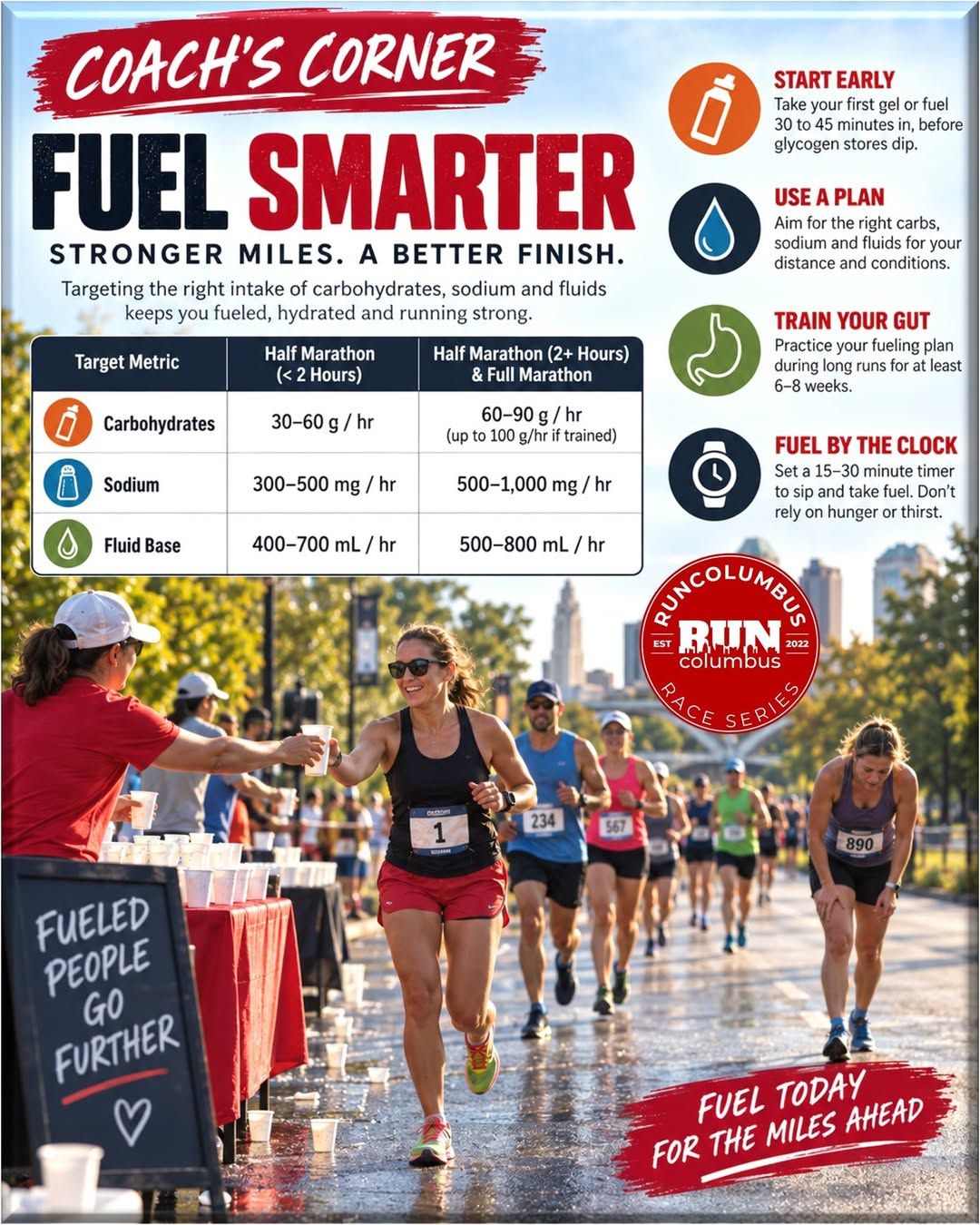
As race distances get longer, fueling becomes integral to training, not simply something we do when we start feeling hungry or tired. Our bodies store carbohydrates as glycogen in the muscles and liver, but those stores are limited, and maintaining carbohydrate availability becomes increasingly important as duration increases. Our stores can sustain us for 60-90 min at a decent effort, but waiting until the tank is empty and then trying to refuel is not optimal. For a half-marathon under two hours, targeting roughly 30–60 grams of carbohydrate per hour can help supplement those stores, while longer half-marathons and full marathons may benefit from 60–90 grams per hour. For many, it is difficult to achieve that level without serious GI issues. Athletes who have specifically trained their gut may tolerate even higher intakes.
How you deliver that fuel matters just as much as how much you consume. Start early rather than waiting until you feel depleted. Taking your first fuel around 30 to 45 minutes into the race and continuing at regular intervals provides a steadier supply of carbs than trying to catch up later. For general fueling needs, the types of carbs are less critical and likely to become more hype than impact. When carbohydrate targets exceed about 60 grams per hour, products combining glucose or maltodextrin with fructose may allow greater carbohydrate absorption by engaging multiple intestinal transport pathways. The trick is finding what works best for YOU and that you can tolerate. That means sugar-free sports drinks undermine that fueling regimen. Maybe it is gels, candy, jelly beans, waffles, or maple syrup – just get the sugar. Also, think about concentration. A concentrated gel is generally best accompanied by water rather than piling a gel and a concentrated sports drink together at the same aid station.
Fluid hydration and sodium intake need to be considered alongside carbohydrate intake, with fluid intake often around 400–800 mL (13–27 oz) per hour and sodium needs varying substantially based on sweat losses and environmental conditions. The warmer the day and the greater the amount of sweat, the higher on the range you’ll fall. These are starting ranges rather than universal prescriptions. A cool race for a light sweater is very different from a hot, humid marathon for someone who loses a lot of fluid and sodium. The goal is to develop an individualized plan that supports carbohydrate availability and hydration without overwhelming the gastrointestinal system or overdrinking. Sodium can come from sports drinks, gels, chews, or other electrolyte products, so count the total from all sources rather than treating each separately. Sodium replacement should also be matched to fluid intake and individual sweat losses. Importantly, sodium supplementation does not make excessive fluid intake safe. Drinking beyond sweat losses, particularly over several hours, is a major contributor to exercise-associated hyponatremia.
None of these numbers should make their debut on race morning. Train your gut just as deliberately as you train your legs. Use long runs and walks to practice the products, amounts, timing, and fluid strategy you intend to use on race day, gradually working toward your target intake instead of suddenly asking your gut to handle 60–90 grams of carbohydrate per hour. Practice how you will carry fuel, which aid stations you will use, and whether taking smaller amounts more frequently works better for you. A watch reminder can help keep fueling consistent when fatigue makes it easy to forget, but your plan should still respond to conditions and your individual needs rather than forcing intake simply because a timer goes off. Race day is the time to execute what you have rehearsed, not experiment with a new gel, drink, or ambitious fueling target. The best fueling plan is not the one with the biggest numbers. It is the one you have practiced, can tolerate, and can consistently execute when the miles get hard.
Dr. Chris Taylor, PhD, RDN, LD, FAND, RRCA Level I Coach is a running coach, registered dietitian, and nutrition researcher at The Ohio State University. He serves as the lead coach for the Columbus Westside Running Club, supporting runners of all abilities through evidence-based training and practical nutrition guidance. An active participant in the RUNColumbus Race Series, Chris brings a unique blend of academic expertise, coaching insight, and community engagement to every mile.