
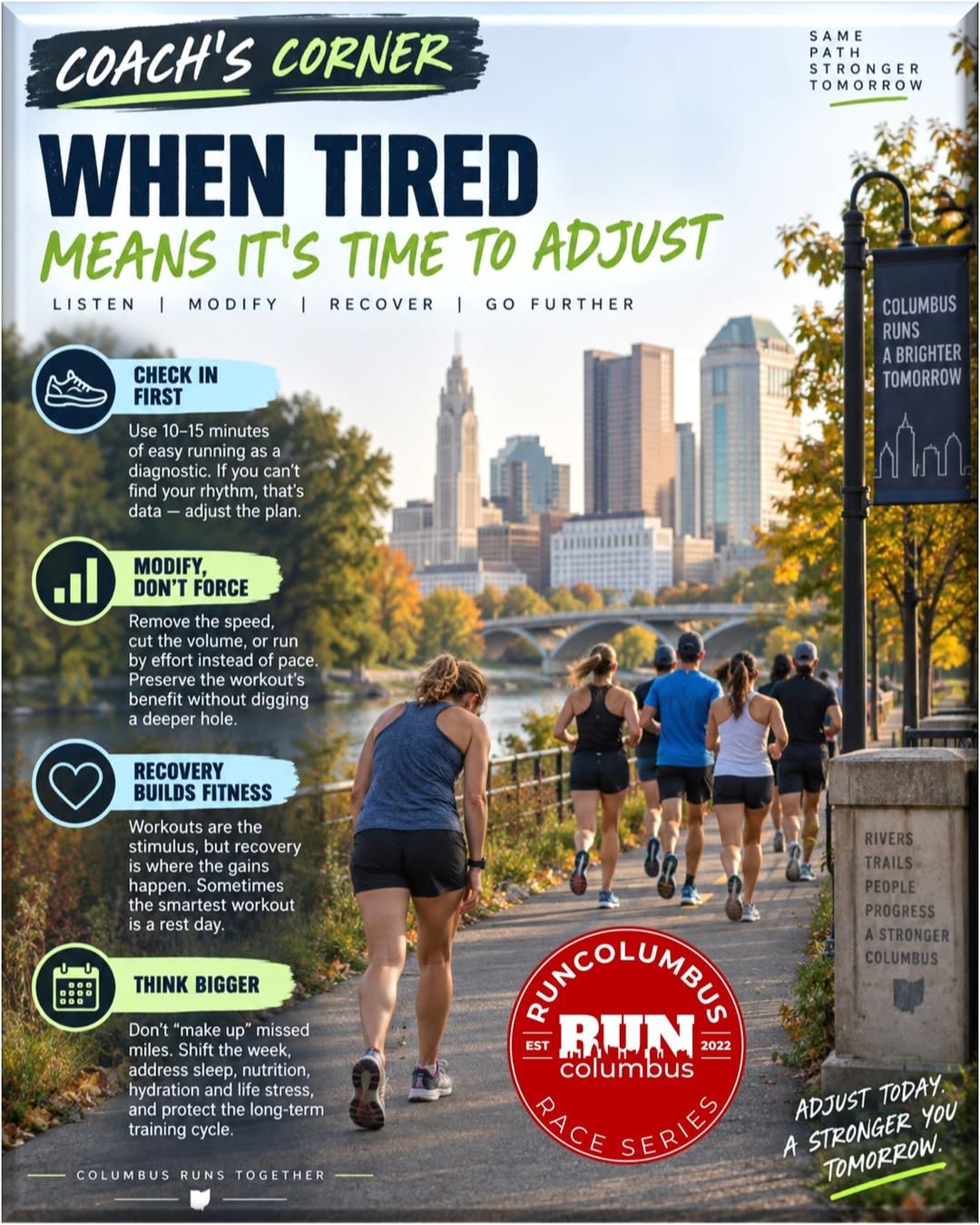
Following a training plan is a delicate balance between applying enough stress to get stronger without teetering over the line into overtraining. Physical and mental toughness absolutely matter in endurance training, and not every day when we feel tired means we need to change the plan. Sometimes we simply need to get moving. On days when things seem a bit rough, give yourself 10 to 15 minutes of easy running or walking to check in. If your breathing settles, your stride loosens, and the effort begins to feel normal, you may be ready to continue the planned workout. But if your legs remain unusually heavy, your effort feels disproportionately difficult, your heart rate or breathing seems abnormal for the pace, or you simply cannot find your rhythm, listen to that information. Fatigue can accumulate from training load, inadequate sleep, under-fueling, travel, work, family responsibilities, and everyday life stress. The challenge is keeping our “inner runner” from convincing us that changing a workout somehow makes us weak or less committed. Training provides the stimulus for improvement, but recovery is when our bodies actually adapt to that stimulus. Sometimes toughness means pushing through ordinary discomfort; other times it means having the discipline to recognize when pushing harder will only dig the hole deeper.
When fatigue tells you that today’s plan needs to change, think of your options as a sliding scale rather than an all-or-nothing decision. The first adjustment may simply be to reduce or remove the intensity. It may be to turn the scheduled intervals, hills, or tempo work into easy conversational miles. If you feel capable of some quality work but not the entire session, reduce the number of repetitions, shorten the workout, or add more recovery between efforts. Eight repeats can become four, or a six-mile run can become four. You can also stop chasing the numbers on your watch and shift from pace to effort, allowing your body to determine what an appropriate workload looks like that day. The goal is not to prove that you can complete the workout at any cost. It is to preserve the intended training benefit without creating unnecessary stress or allowing fatigue to cause your form to deteriorate. And sometimes the right answer is to pull the plug entirely. A zero-mile day, some gentle mobility, a good meal, and extra sleep may contribute more to your next great workout than several miles of exhausted, low-quality training.
The same flexibility needs to extend beyond today’s workout to the rest of the week. One of the biggest mistakes after shortening or skipping a session is trying to “make up” those miles or cram the missed workout into the next available day. Those miles are gone, and that is okay. Instead, look at the architecture of the entire week. Moving a demanding workout back 24 to 48 hours, substituting an easy day, or simply eliminating one session can give your body the recovery buffer it needs without compromising the larger training cycle. At the same time, look beyond the training plan and ask why you are tired. Are you getting enough carbohydrate and total energy to support your workload? Are you hydrated? How has your sleep been? Has work, travel, school, or family stress been unusually high? Your body does not separate training stress from the rest of your life; it has to recover from it all. Most importantly, zoom out. Fitness is built through weeks and months of consistent training, not by stubbornly completing every individual workout exactly as written. The goal is not to protect today’s workout. The goal is to protect the training cycle that gets you to the starting line healthy, prepared, and ready to perform.
Dr. Chris Taylor, PhD, RDN, LD, FAND, RRCA Level I Coach is a running coach, registered dietitian, and nutrition researcher at The Ohio State University. He serves as the lead coach for the Columbus Westside Running Club, supporting runners of all abilities through evidence-based training and practical nutrition guidance. An active participant in the RUNColumbus Race Series, Chris brings a unique blend of academic expertise, coaching insight, and community engagement to every mile.