
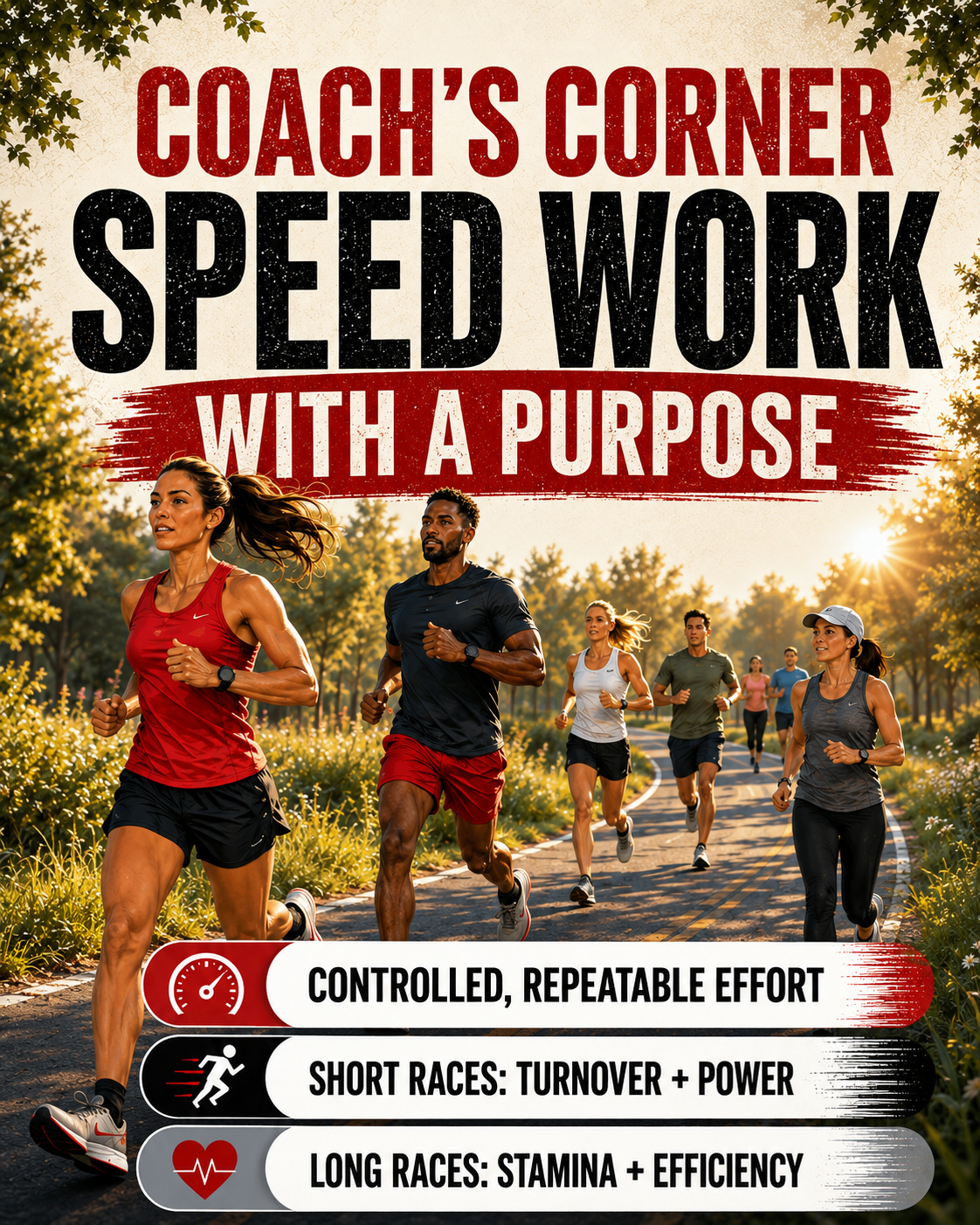
Every run on your schedule should have a clear purpose. Progress comes from respecting the distinct roles of easy days, long runs, and quality workouts rather than completing every session at the same moderate effort. Easy miles should make up most of your weekly training and remain comfortable enough to support recovery. Speed days, meanwhile, should be deliberate, structured, and matched to your goals. Speed work can feel intimidating, especially for those who are new to structured workouts or are unsure what “fast” is supposed to feel like. However, speed work does not mean sprinting as hard as possible until your form falls apart. It means completing controlled, repeatable running or walking intervals that improve mechanics, efficiency, and confidence at faster paces.
When training for a 5K or 10K, speed sessions typically feature shorter, faster intervals, such as 200- to 800-meter repeats. These efforts are often completed at or slightly faster than goal race pace to improve leg turnover, cardiorespiratory capacity, and your ability to maintain good form as fatigue develops. Longer or more complete recovery periods allow you to perform each repetition with a consistent pace and mechanics. The goal is not to make every interval faster than the last. It is to complete the entire workout as planned, building running economy, neuromuscular coordination, and greater comfort with the discomfort of shorter-distance racing.
For a half or full marathon, speed work usually shifts toward longer repetitions, sustained tempo efforts, and lactate-threshold workouts. Repeats of 1,000 to 2,000 meters and longer race-pace segments better reflect the demands of maintaining a controlled effort over an extended distance. Recovery periods are often shorter and may involve an easy jog or walk instead of complete rest, helping your body recover while you continue to move. These sessions build stamina, improve fuel efficiency, and develop the fatigue resistance needed to maintain pace and form late in a race. Regardless of distance, speed work should support your larger goal without overwhelming the easy mileage and recovery that make it effective.
Dr. Chris Taylor, PhD, RDN, LD, FAND, RRCA Level I Coach is a running coach, registered dietitian, and nutrition researcher at The Ohio State University. He serves as the lead coach for the Columbus Westside Running Club, supporting runners of all abilities through evidence-based training and practical nutrition guidance. An active participant in the RUNColumbus Race Series, Chris brings a unique blend of academic expertise, coaching insight, and community engagement to every mile.