
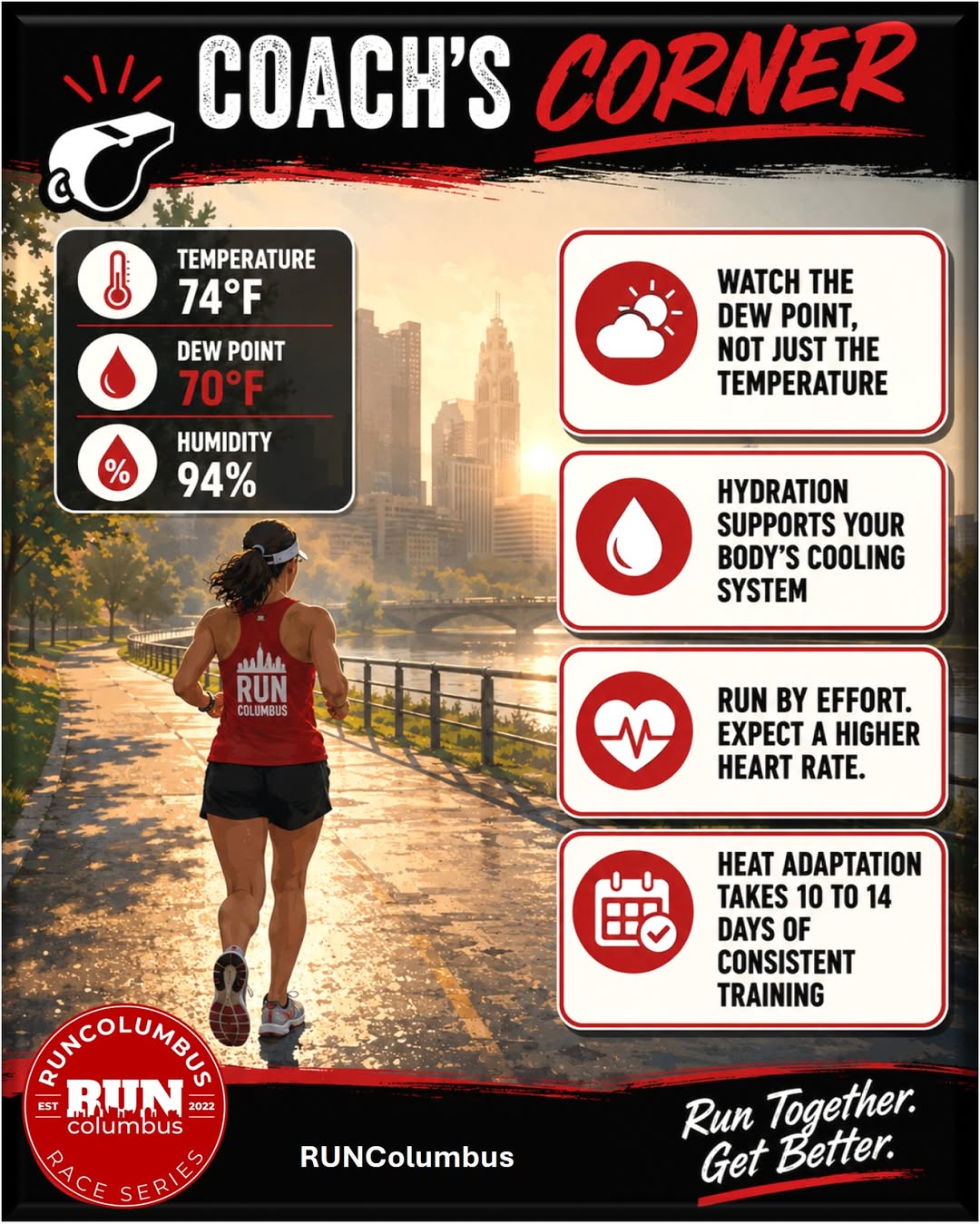
Summer running is about more than simply dealing with higher temperatures. The real challenge is how your body manages the heat it produces while you exercise. Our bodies lose more than half of the energy as heat when we make fuel (ATP) for metabolism. This efficiency drops further during physical activity, leading to greater heat generation. Every stride generates metabolic heat, and the harder you work, the more heat your muscles create. Under ideal conditions, your body cools itself by increasing blood flow to the skin and sweating. When the air is dry, this system works remarkably well. As dew point rises, however, the air becomes increasingly saturated with moisture, slowing sweat evaporation and making it much harder for your body to shed excess heat. That’s why a 75°F morning with a 70°F dew point can feel considerably more difficult than an 85°F day with dry air. In many cases, dew point is a better predictor of how challenging your run will feel than temperature alone.
As your core temperature rises, your body redirects more blood toward the skin to aid cooling. Blood vessels dilate to get more blood moving to the skin for more heat transfer. At the same time, you’re losing fluid through sweat. When you become even mildly dehydrated, blood volume begins to decrease. Now your cardiovascular system has to work harder because it has less fluid to circulate while trying to accomplish two competing tasks: delivering oxygen to your working muscles and transporting heat to your skin through more open blood vessels. Heart rate rises, pace slows, and perceived effort climbs even if your fitness hasn’t changed. This creates a cycle where heat increases sweating, sweating increases fluid loss, fluid loss reduces your ability to cool yourself, and the body responds by working even harder. Staying well hydrated before, during, and after your run helps preserve blood volume and gives your body’s cooling system the best chance to keep up with the demands of summer training.
The encouraging news is that the body adapts remarkably well when given time. With consistent exposure over 10 to 14 days, heat acclimation begins to take place. You start sweating earlier, produce more sweat, conserve sodium more effectively, and expand your plasma volume, allowing your cardiovascular system to better support both cooling and performance. These adaptations don’t eliminate the effects of heat, but they do improve your ability to tolerate it safely. The key is to respect the conditions while those adaptations develop. Check the dew point before your run, focus on effort rather than pace, slow down when conditions demand it, and remember that difficult summer runs are building the physiological adaptations that often pay dividends when cooler fall racing weather finally arrives.
Dr. Chris Taylor, PhD, RDN, LD, FAND, RRCA Level I Coach is a running coach, registered dietitian, and nutrition researcher at The Ohio State University. He serves as the lead coach for the Columbus Westside Running Club, supporting runners of all abilities through evidence-based training and practical nutrition guidance. An active participant in the RUNColumbus Race Series, Chris brings a unique blend of academic expertise, coaching insight, and community engagement to every mile.