
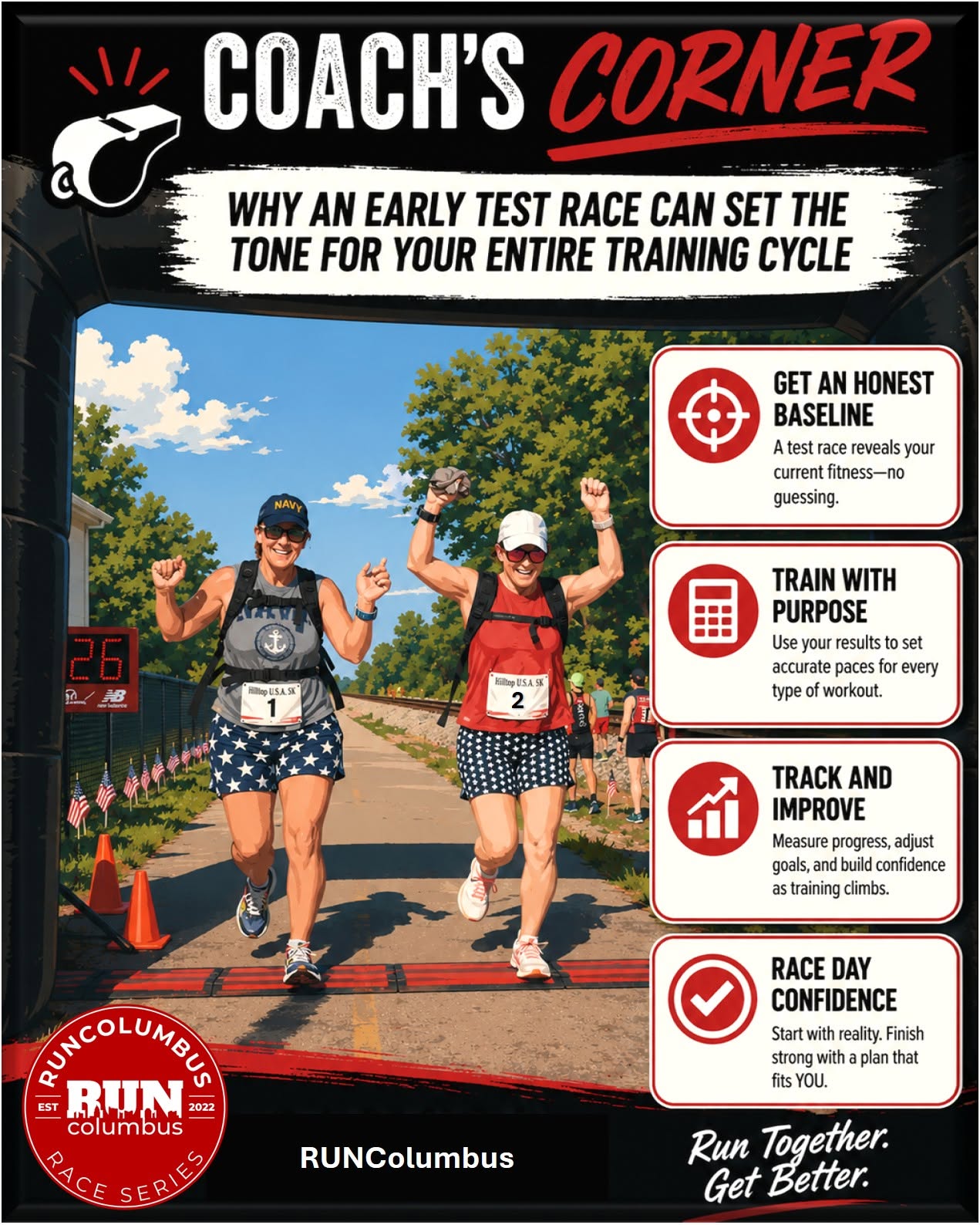
One of the biggest mistakes runners make at the beginning of a training cycle is setting goals based on “ghost fitness.” It’s easy to remember the personal best you ran a few years ago or focus on the pace you hope to achieve in the future. The challenge is that neither of those reflects where your fitness stands today. An early-season 5K, 10K, or structured time trial gives you an honest snapshot of your current aerobic fitness and endurance. That objective starting point removes much of the guesswork from training, helping you avoid pushing too hard too soon or becoming discouraged by unrealistic expectations. Training is most effective when it begins with an accurate understanding of where you are, not where you used to be or where you hope to be months from now.
Once you have that performance data, it becomes much more than a finish time. Entering the result into a pace calculator like the McMillan pace calculator transforms a single race into individualized training paces for easy runs, tempos, intervals, and long runs. Suddenly, every workout has a clear purpose. Easy days stay easy enough to promote recovery and aerobic development, while harder workouts become challenging enough to stimulate adaptation without becoming all-out races. Knowing your target race pace allows you to practice that pace, which develops the neuromuscular efficiency that makes race pace feel smoother and more natural over time. Rather than guessing what your workouts should feel like, you are training with precision based on your current level of fitness.
That first test race also becomes the benchmark for everything that follows. As the weeks of consistent training accumulate, repeating a race or another controlled effort allows you to measure real progress instead of relying solely on how you feel. Seeing your pace improve or your effort decrease at the same speed provides powerful confirmation that your training is working. Those mid-cycle checkpoints also afford the opportunity to refine your race goals based on measurable improvement rather than optimism alone. By the time race day arrives, you’ll stand on the starting line with goals that are both ambitious and realistic, supported by months of purposeful training and the confidence that comes from knowing exactly where your fitness has taken you.
Dr. Chris Taylor, PhD, RDN, LD, FAND, RRCA Level I Coach is a running coach, registered dietitian, and nutrition researcher at The Ohio State University. He serves as the lead coach for the Columbus Westside Running Club, supporting runners of all abilities through evidence-based training and practical nutrition guidance. An active participant in the RUNColumbus Race Series, Chris brings a unique blend of academic expertise, coaching insight, and community engagement to every mile.