
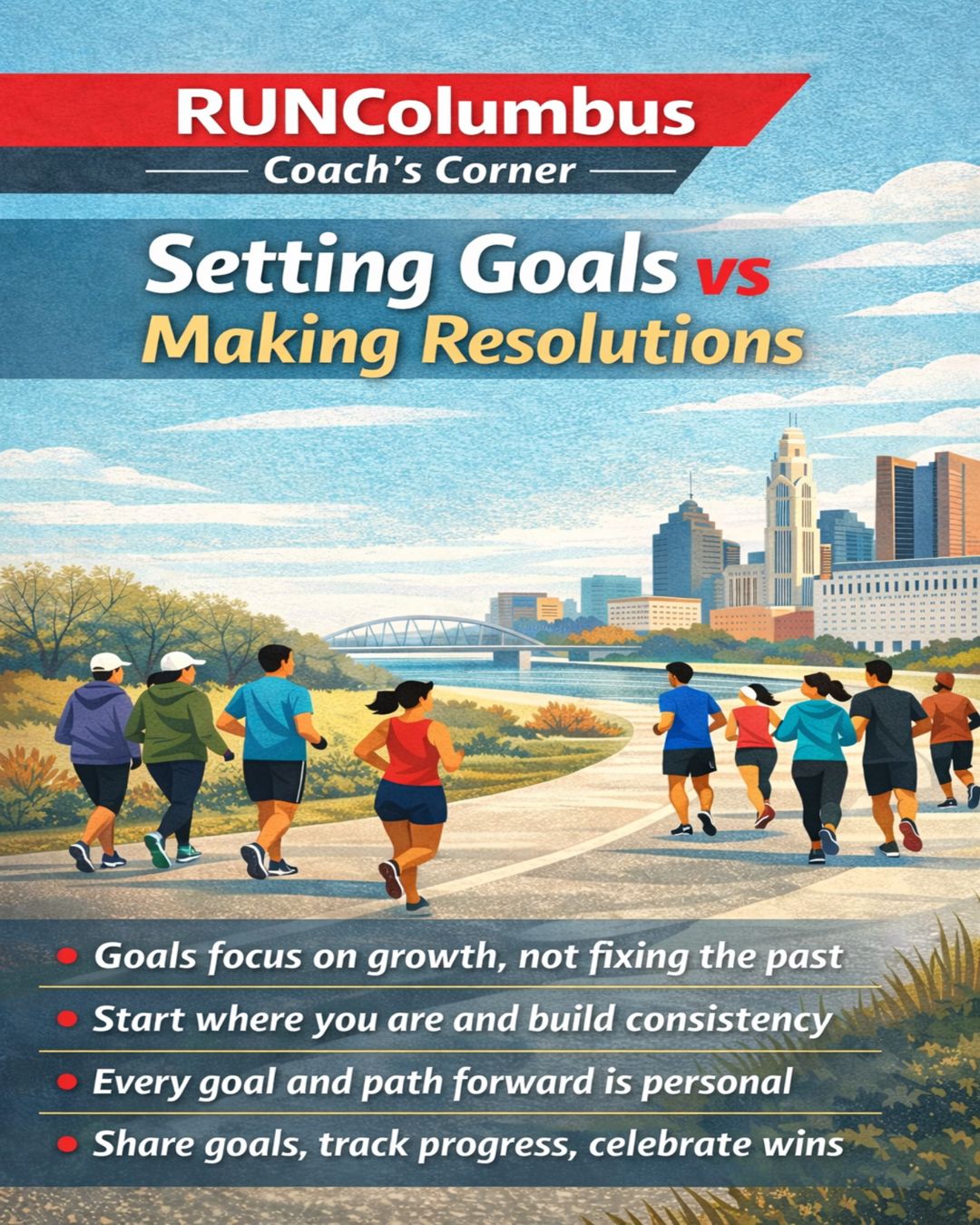
As the calendar turns, it is easy to fall into the trap of New Year’s resolutions. Resolutions are often rooted in unrealistic expectations and a desire to make up for the past year, which can create pressure and frustration before momentum even has a chance to build. Training goals are different. They begin with an honest assessment of your current situation and focus on where you want to go next, grounded in a growth mindset and a realistic plan that supports steady progress over time.
Your goals should reflect your current life, fitness, and priorities, not someone else’s highlight reel. For some, the most meaningful goal may be consistency, building the habit of showing up regularly even during busy or stressful weeks. For others, a distance goal or a time goal may provide clarity and motivation. These goals can change throughout the year, and that is normal. What matters most is choosing goals that are personal, achievable, and supportive of long-term enjoyment and health.
Sharing goals with a friend or training partner can strengthen accountability and encourage when motivation dips. Writing goals down, adding regular check-ins to your calendar, and tracking progress help keep them visible and actionable. Along the way, celebrate small wins, reflect on what is working, and make adjustments when needed. Progress is rarely linear, and recognizing how far you have come is just as important as focusing on what comes next.
Dr. Chris Taylor, PhD, RDN, LD, FAND, RRCA Level I Coach is a running coach, registered dietitian, and nutrition researcher at The Ohio State University. He serves as the lead coach for the Columbus Westside Running Club, where he supports runners of all abilities through evidence-based training and practical nutrition guidance. An active participant in the RUNColumbus Race Series, Chris brings a unique blend of academic expertise, coaching insight, and community engagement to every mile.