
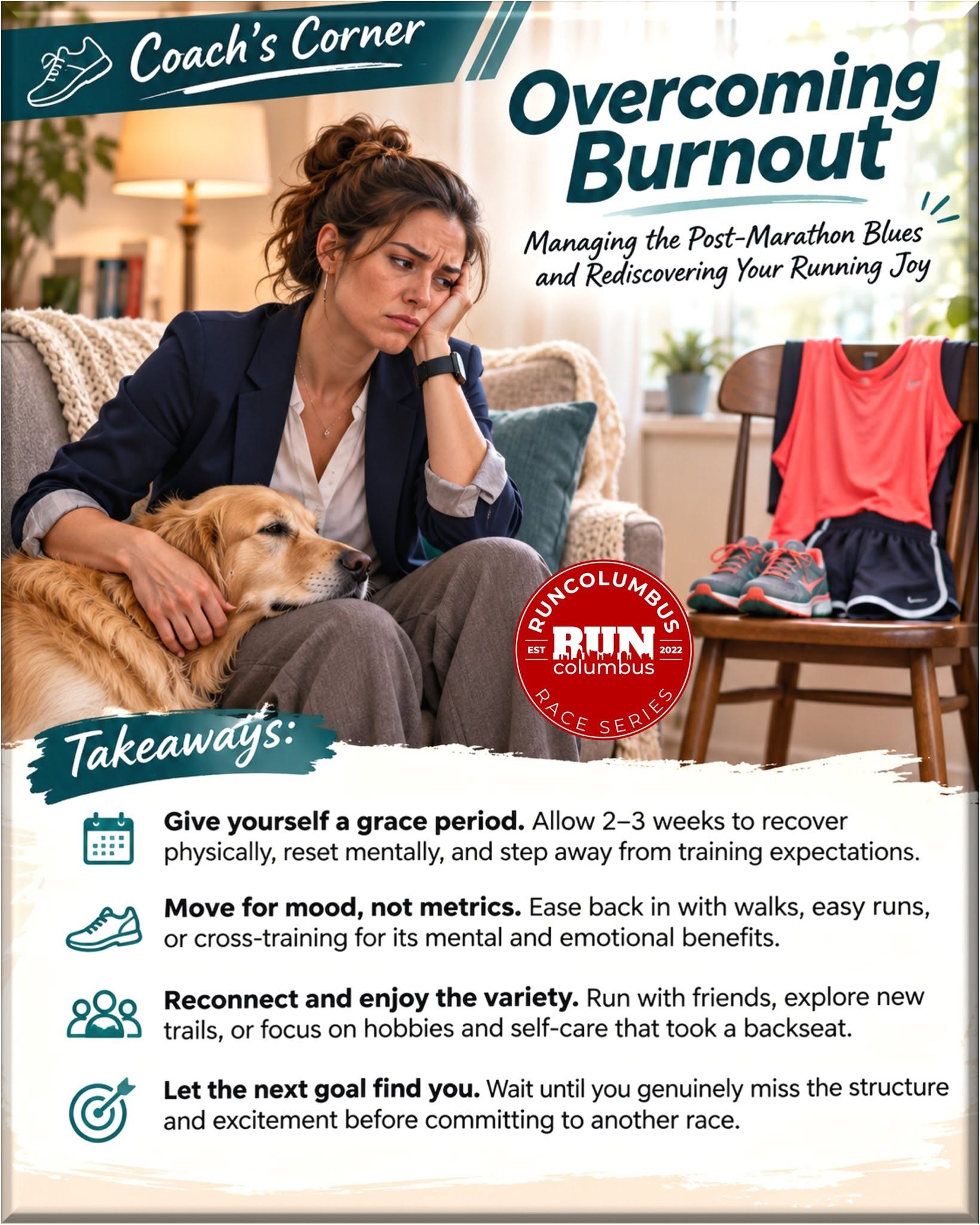
Waning motivation comes in many forms. You’ve spent months preparing for a big race, organizing your schedule around training, logging miles, and focusing your energy on one important day. Then, it’s over. The finish line is behind you, the training calendar is empty, and when that target has passed, something suddenly feels missing. The so-called “post-marathon blues” are a real thing, but they can happen after any major goal, a demanding training cycle, or a prolonged level. This may also come from prolonged engagement in an activity that feels stale. The physical fatigue is only part of the story. Your daily routine, social connections, stress relief, and even your sense of identity may have become closely tied to training. When that structure disappears, changes in physical activity, emotional stimulation, and familiar routines can leave you feeling flat, restless, or surprisingly unmotivated. What feels like laziness or disinterest may actually be emotional exhaustion. After sustained commitment to an active regimen, your mind may be asking for a reprieve just as much as your body needs one.
As soon as a goal race ends, the natural reaction is often to ask, “What’s next?” We are so accustomed to having a goal on the calendar that an empty training schedule can feel uncomfortable. You might be tempted to immediately commit to another race, restart a new training plan, or rush back to your previous mileage simply to restore that familiar sense of direction. There’s often an urgency to fill that void. Following a marathon or similarly demanding event, giving yourself two to three weeks of reduced expectations can provide valuable time for physical recovery and mental decompression. That doesn’t necessarily mean doing nothing. It means allowing yourself to step away from the pressure of prescribed workouts, mileage targets, and early alarms. Catch up on sleep, reconnect with friends and family, and finally enjoy some of the activities that guilt made take a backseat to your training schedule. Recovery isn’t just about repairing tired muscles, but it’s also about restoring the enthusiasm that made you want to train in the first place.
When you’re ready to become more active again, remember that not every run or walk needs a training purpose. Sometimes the greatest benefits come from simply getting outside, clearing your head, and enjoying the company of others. Meet friends for an easy social run, explore a different trail, take a relaxing walk, or try some cross-training without worrying about pace, distance, or performance. An escape from a regimen might be a welcome shift in the pressures that training exerts on the psyche. Permit yourself to enjoy a period of general fitness where consistency and enjoyment matter more than progression. Your fitness doesn’t disappear overnight, and you don’t need to prove your commitment by immediately chasing another finish line. Eventually, you may find yourself missing the structure, challenge, and excitement of working toward a goal. That’s a much better time to consider what comes next. Remember, you don’t always have to be training for something to enjoy running or walking. Sometimes the best way to move forward is to rediscover why you loved doing it in the first place.
Dr. Chris Taylor, PhD, RDN, LD, FAND, RRCA Level I Coach is a running coach, registered dietitian, and nutrition researcher at The Ohio State University. He serves as the lead coach for the Columbus Westside Running Club, supporting runners of all abilities through evidence-based training and practical nutrition guidance. An active participant in the RUNColumbus Race Series, Chris brings a unique blend of academic expertise, coaching insight, and community engagement to every mile.