
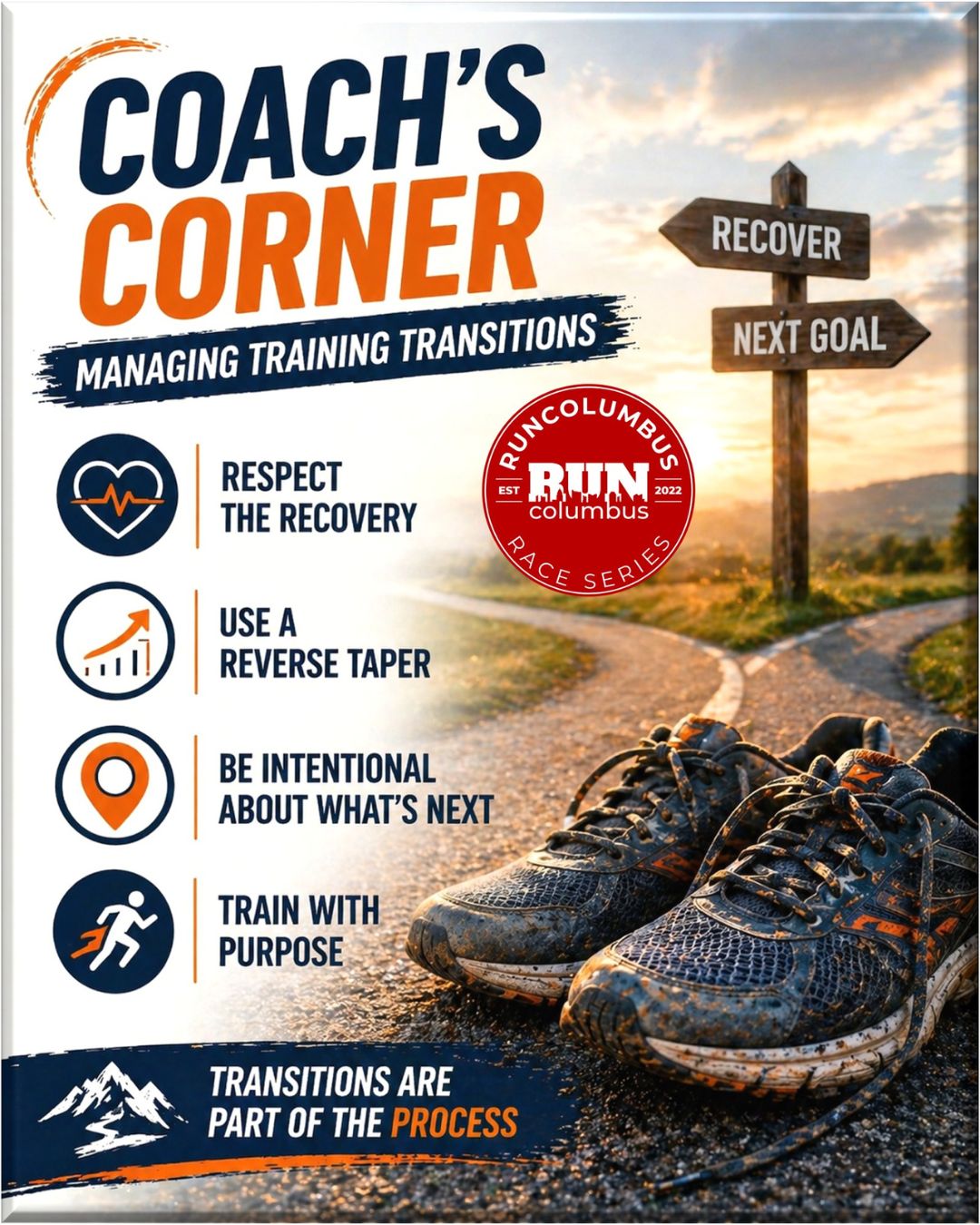
Each time we ramp up for a goal race, we follow a structured path that builds base fitness, layers in volume and intensity, and peaks at the right moment. The taper allows the body to absorb that work and prepare for race day. While not all race days give us the exact outcome we’d planned for, we need to respect the physical toll that the training and the race effort exerts on the body. But once the race is over, many runners lose that same sense of direction. Whether the outcome matched expectations or not, the training cycle and race effort place a real physiological load on the body. Just because the race is finished does not mean the work is done. Recovery is not accidental. It needs to be just as intentional as the training that got you there.
There are a few rules of thumb around post-race recovery, some more realistic than others. You may hear recommendations like taking a day off for every mile raced or waiting until basic movement feels completely normal again. Others advise that you aren’t ready to run until you no longer have to “trust fall” to the toilet. While those can be helpful guardrails, the bigger concept is a reverse taper. Gradually reintroducing activity allows your body to repair the muscle damage and systemic fatigue created by racing. The more “maximum” your effort was, the more time you’ll need to give yourself grace before you return to full training. Regardless, a marathon or half-marathon is still is a considerable load on the legs and system. The harder you pushed, the longer that process will take. Rushing back too quickly often leads to lingering fatigue or overuse injuries that could have been avoided with patience.
Once you move through that transition phase, it is time to decide what comes next. It is perfectly fine to not have a next goal race lined up. You can relish the accomplishment and maintain your fitness without a defined goal. If you are no longer following that type of structure to your training, it can be easy to fall out of a routine. Stepping away entirely makes it harder to return at the same level later. You’ll need to reprime the system to get going again. This window can be used to shift focus toward strength, mobility, or cross-training while maintaining consistency. Whether you have a next race planned or not, your approach should reflect your goals. Training transitions are not a gap between plans. They are a critical part of long-term progress.
Dr. Chris Taylor, PhD, RDN, LD, FAND, RRCA Level I Coach is a running coach, registered dietitian, and nutrition researcher at The Ohio State University. He serves as the lead coach for the Columbus Westside Running Club, supporting runners of all abilities through evidence-based training and practical nutrition guidance. An active participant in the RUNColumbus Race Series, Chris brings a unique blend of academic expertise, coaching insight, and community engagement to every mile.