
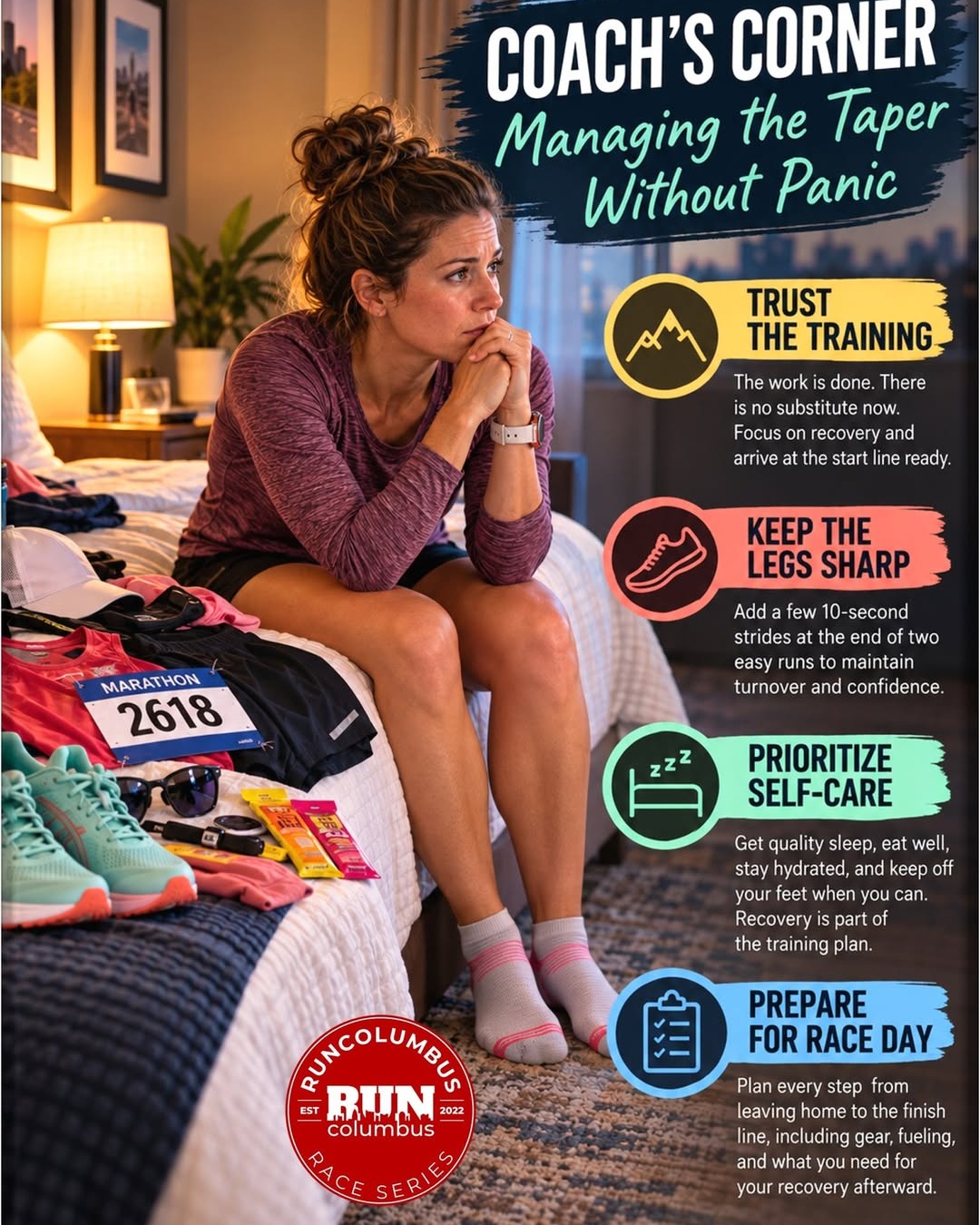
The work is done. There is no substitute for training, and there is nothing you can do in the final couple of weeks that will suddenly create fitness that was not built during the months before. What you can do is interfere with the fitness you already have by trying to squeeze in a few more hard workouts or extra miles. By the end of a training cycle, the accumulated miles and wear and tear have added up, and your body is ready for some downtime to repair, replenish, and absorb the work you have done. That is exactly what the taper is designed to accomplish. Reducing your training allows muscle damage to repair, energy stores to recover, and accumulated fatigue to fade so you can arrive at the starting line ready to use the fitness you have built. Despite your deepest fears, you are not going to suddenly lose that fitness during a short taper. At this point, recovery is part of the training plan, not an interruption of it.
Unfortunately, this is also about the time when the taper panic begins. You may suddenly feel hungry all the time, your mood may fluctuate, and every little ache or strange sensation can seem much more noticeable. You are also getting less of the regular endorphin boost and stress relief that came with all those miles, leaving you with more time and energy to wonder whether you are doing enough. Resist the urge to test yourself. The goal now is not to prove that your fitness is still there. At the same time, spending two weeks doing nothing but easy miles can leave your legs feeling a little like a baby deer when race day arrives. A few relaxed 10-second strides at the end of two easy runs during the taper can help maintain leg turnover and neuromuscular sharpness without creating meaningful fatigue. Think of them as reminders to your legs about what moving quickly feels like, not workouts designed to build additional fitness.
Use the extra time that training has given back to you wisely. Make sleep a priority and establish a consistent routine. Eat well, stay hydrated, and spend a little less time on your feet when you can. Then turn some of that nervous race energy toward the things you can control. Walk yourself through race day from the moment you leave home until well after you cross the finish line. How are you getting to the start? What will you wear while waiting, and do you need throwaway clothes? What is your pacing and fueling plan through the miles? What will you need immediately after you finish, and what will support your recovery afterward? The taper can feel uncomfortable because doing less after months of doing more feels wrong. But the goal is no longer to build fitness. The goal is to arrive at the starting line rested, repaired, prepared, and ready to use it.
Dr. Chris Taylor, PhD, RDN, LD, FAND, RRCA Level I Coach is a running coach, registered dietitian, and nutrition researcher at The Ohio State University. He serves as the lead coach for the Columbus Westside Running Club, supporting runners of all abilities through evidence-based training and practical nutrition guidance. An active participant in the RUNColumbus Race Series, Chris brings a unique blend of academic expertise, coaching insight, and community engagement to every mile.