
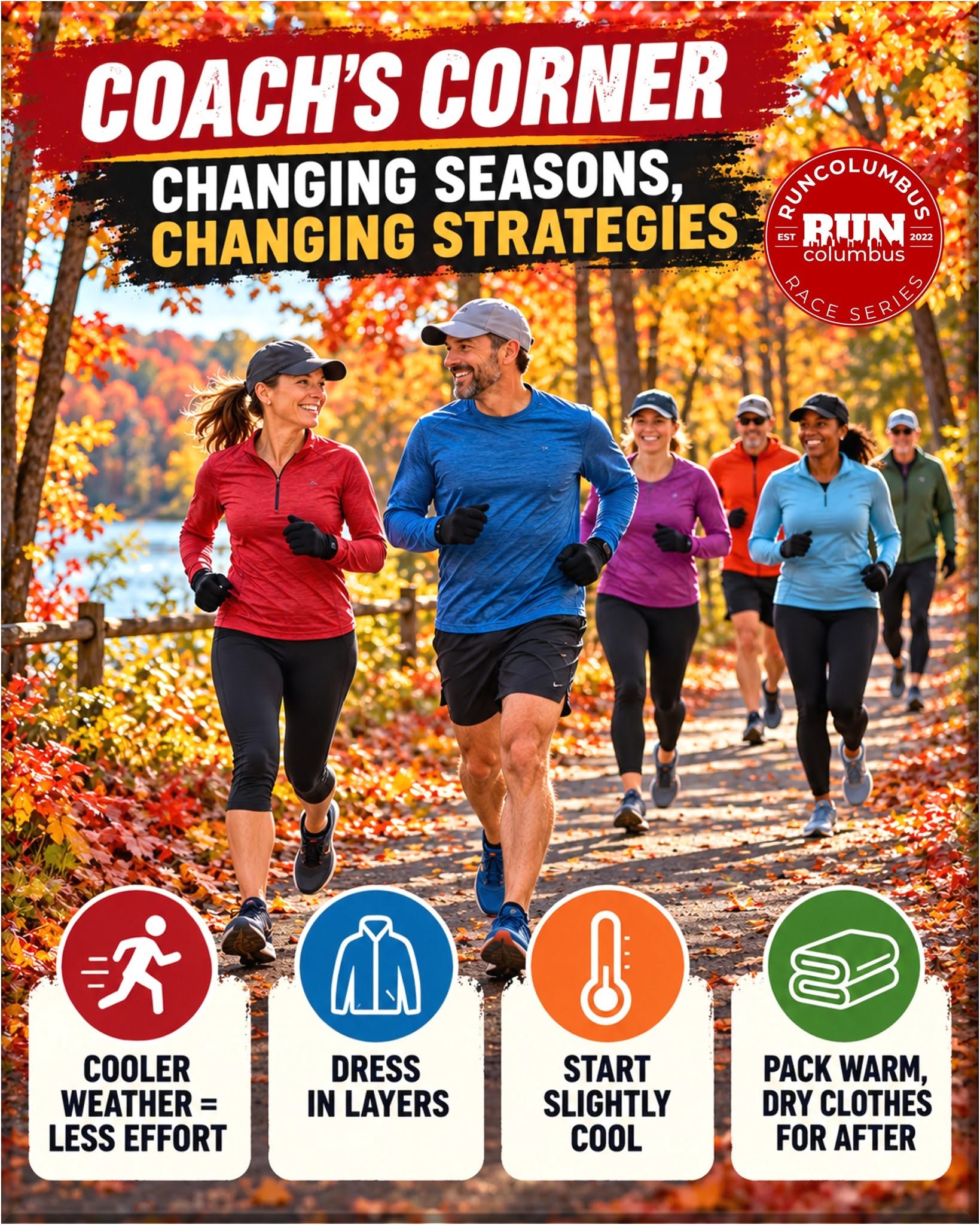
After months of training through summer heat and humidity, those first cool fall days can feel almost magical. Suddenly, the same pace or effort that felt challenging a few weeks ago feels noticeably easier. That feeling is real. Cooler temperatures reduce the amount of work your body has to devote to thermoregulation, including sending blood toward the skin and producing sweat to dissipate heat. That means more of your cardiovascular capacity can support the muscles doing the work, often allowing you to move faster at the same perceived effort. Enjoy the payoff from all those difficult summer miles, but be careful with it. This is especially important if you are tapering for a fall race. When your legs are fresh and the weather finally cooperates, it can be very tempting to turn an easy run into a workout. Stick with the plan. Save that cool-weather performance boost for race day.
Changing seasons also means relearning how to dress for your training. The thermometer reading doesn’t tell the whole story because once you start moving, your body produces a considerable amount of heat. A useful starting point is to dress as though it is roughly 15 to 20°F warmer than the actual temperature, then adjust for wind, precipitation, your individual cold tolerance, and whether you are running or walking. In the 50s, many people remain comfortable in shorts and a short-sleeve shirt. As temperatures drop into the 30s, gradually add lightweight long sleeves, tights, gloves, ear protection, a vest, or a wind-resistant outer layer. The key is layers, not bulk. Moisture-wicking layers allow you to regulate your temperature by unzipping, removing, or adding pieces as conditions change. You may feel a little chilly standing around before you start, but if you are completely warm before you begin, there is a good chance you will be overdressed once your internal furnace gets going.
That furnace creates another challenge when the workout or race ends. During activity, working muscles produce a tremendous amount of heat, but heat production drops quickly once you stop, even if your clothing may still be damp with sweat. Add cool air and wind, and suddenly the temperature that felt fantastic while you were moving can feel downright cold. That is why post-run clothing should be part of your training and race-day plan. Keep a dry shirt, warm layer, socks, hat, or other comfortable clothing waiting in your car or gear bag, and get out of damp clothing as soon as practical. A mylar blanket or an oversized warm layer can help retain some of the heat you generated as your body transitions back toward its resting temperature. Fall can provide some of the best conditions of the entire year for running and walking. Enjoy the cooler weather, dress for the effort rather than just the thermometer, and remember that your plan should include staying comfortable after the miles are finished, too.
Dr. Chris Taylor, PhD, RDN, LD, FAND, RRCA Level I Coach is a running coach, registered dietitian, and nutrition researcher at The Ohio State University. He serves as the lead coach for the Columbus Westside Running Club, supporting runners of all abilities through evidence-based training and practical nutrition guidance. An active participant in the RUNColumbus Race Series, Chris brings a unique blend of academic expertise, coaching insight, and community engagement to every mile.