
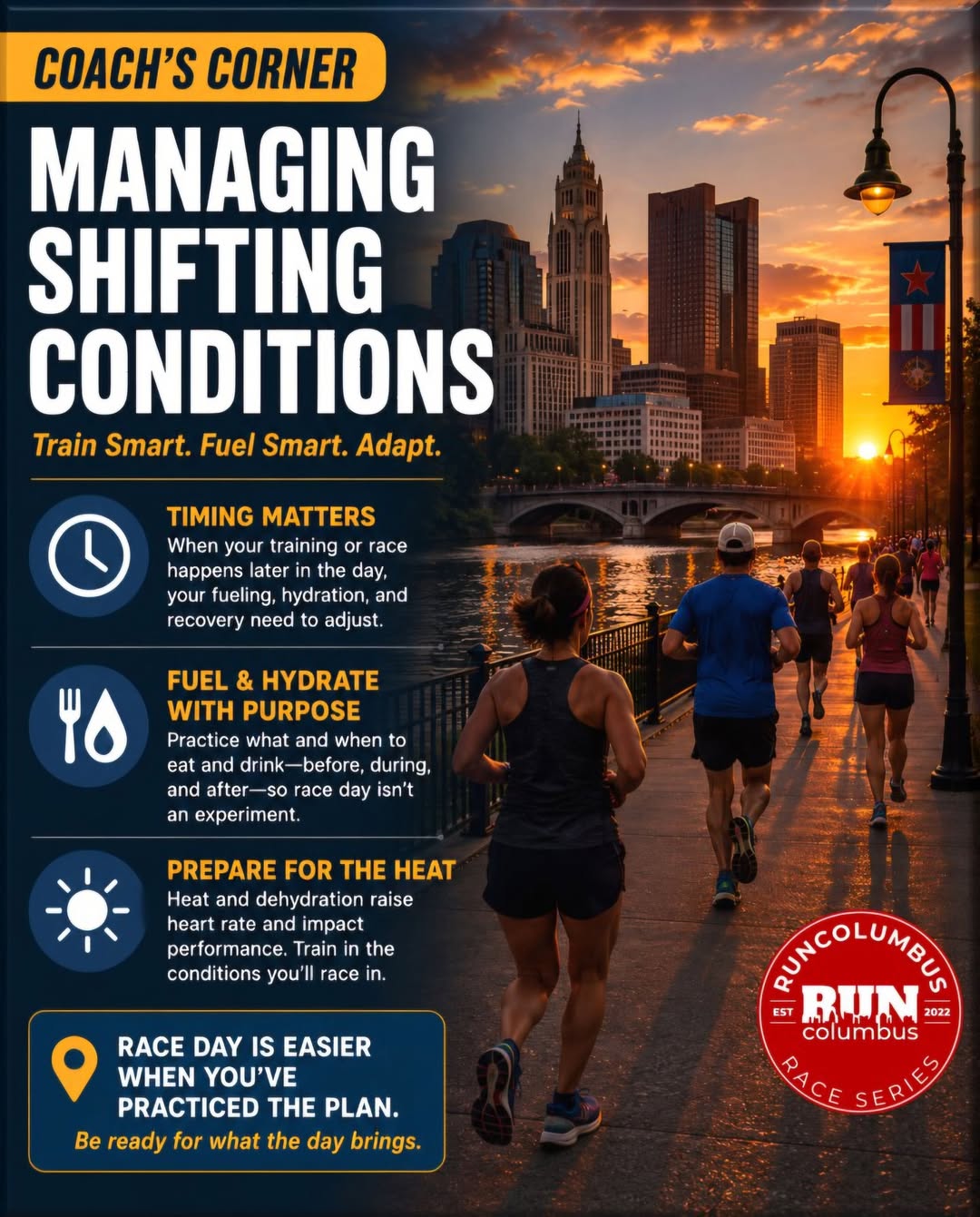
One of the cornerstones of successful training is routine. Consistency and pattern help us stay on track, making it easier to accumulate the days, weeks, and months of training that ultimately lead to progress. The challenge is that life does not always cooperate with our preferred schedule. Work commitments, family obligations, travel, weather, and race logistics can all disrupt our normal rhythm. Sometimes we even choose events that occur at unusual times of day or under conditions that differ significantly from our typical training environment. These situations are not obstacles to success, but they do require additional preparation and planning to ensure the experience remains both productive and enjoyable.
Part of training is practicing far more than just the miles. We are also rehearsing fueling, hydration, pacing, recovery, and decision making. My coach used to tell us, “You can’t run a top fuel dragster on low lead gas.” The same principle applies to race prep. If your workout or race shifts from an early morning start to the middle of the day or evening, your fueling strategy must shift as well. You need to plan breakfast and lunch with enough energy to support performance without creating gastrointestinal distress. Training gives us an opportunity to practice what foods work, when to eat them, and how to manage hydration before, during, and after activity. The cumulative effect of the decisions throughout the day materializes at the start and throughout that effort.
As summer temperatures arrive in full force, environmental conditions become another factor that deserves attention. Heat and dehydration both increase cardiovascular strain and can elevate heart rate even when pace remains unchanged. If your goal race takes place during the afternoon or evening, it is important to include some training under similar conditions. Athletes who complete all of their training during cool morning hours may find themselves unprepared for the demands of racing in the heat of the day. Heat adaptation occurs gradually through repeated exposure, and it cannot be developed on race day. Practicing in conditions that resemble your event allows you to refine your pacing, hydration, and fueling strategies while building confidence for whatever race day brings. Successful training is not about preparing for perfect conditions. It is about preparing for the conditions you are most likely to face.
Dr. Chris Taylor, PhD, RDN, LD, FAND, RRCA Level I Coach is a running coach, registered dietitian, and nutrition researcher at The Ohio State University. He serves as the lead coach for the Columbus Westside Running Club, supporting runners of all abilities through evidence-based training and practical nutrition guidance. An active participant in the RUNColumbus Race Series, Chris brings a unique blend of academic expertise, coaching insight, and community engagement to every mile.