
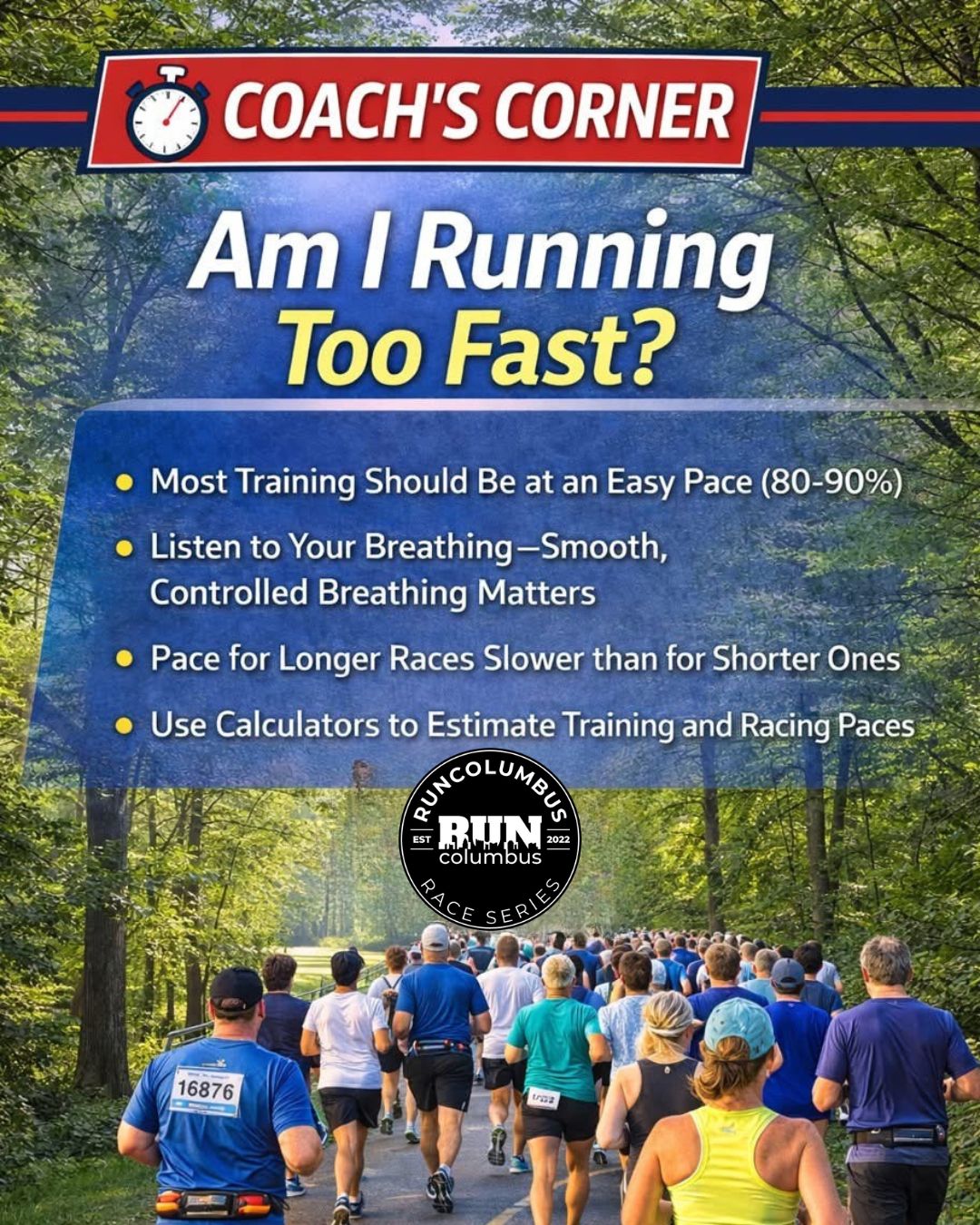
One of the most common questions from both new and experienced runners is how fast they should run in training and racing. In a culture that often rewards doing more and doing it harder, it is easy to fall into the trap of believing every run needs to be fast to “count.” The reality is that, especially when training for longer races, constantly pushing the pace or racing every weekend increases the chance of showing up tired, injured, or not at all on race day.
Every workout has a purpose. Getting faster does require running fast at times, but only when your body is strong and prepared enough to handle it. A useful rule of thumb is that about 80 to 90 percent of your training volume should be done at an easy effort. These runs build endurance, efficiency, and the ability to sustain energy for longer periods. Easy pace is often described as “conversation pace,” but when you are running or walking alone, breathing becomes an even better guide. Smooth, controlled breathing tells you that you are staying within your limits. As a training group pacer, listening to breathing is often the clearest sign that someone is pushing their long runs faster than their current fitness supports.
This awareness carries directly into racing. Shorter races like a 5K allow you to push much closer to your maximum effort, while longer races demand patience. A common mistake is going out too fast and trying to salvage the race later. Heavy panting or gasping early on, especially in a half marathon or marathon, is a warning sign that you are pushing beyond your capacity. Staying in a range of deep, controlled breathing early helps preserve energy and sets you up to finish strong rather than fade.
Finding the right pace can still feel tricky, and this is where tools can help. Pace calculators, such as the McMillan Calculator, utilize recent race performances to estimate training and racing paces at various distances. One important takeaway is that as distances increase, training paces typically need to be slowed down. A pace that felt comfortable for half marathon training may be too aggressive for the higher volume of marathon training. As your training progresses and your fitness improves, updating those estimates with more recent race efforts can help keep your goals realistic, sustainable, and aligned with staying healthy.
Dr. Chris Taylor, PhD, RDN, LD, FAND, RRCA Level I Coach is a running coach, registered dietitian, and nutrition researcher at The Ohio State University. He serves as the lead coach for the Columbus Westside Running Club, where he supports runners of all abilities through evidence-based training and practical nutrition guidance. An active participant in the RUNColumbus Race Series, Chris brings a unique blend of academic expertise, coaching insight, and community engagement to every mile.